
If you have heard the term and wondered what is a fractional CFO, the short answer is a senior finance executive who works with your business part-time. You get the strategic thinking of a chief financial officer without the cost and commitment of a full-time hire. For many growing companies, that is the missing piece between “the books are done” and “we know where we are headed.”
This guide explains what a fractional CFO does, how the role differs from other finance roles, and how to tell whether your business is a fit.
What a Fractional CFO Does
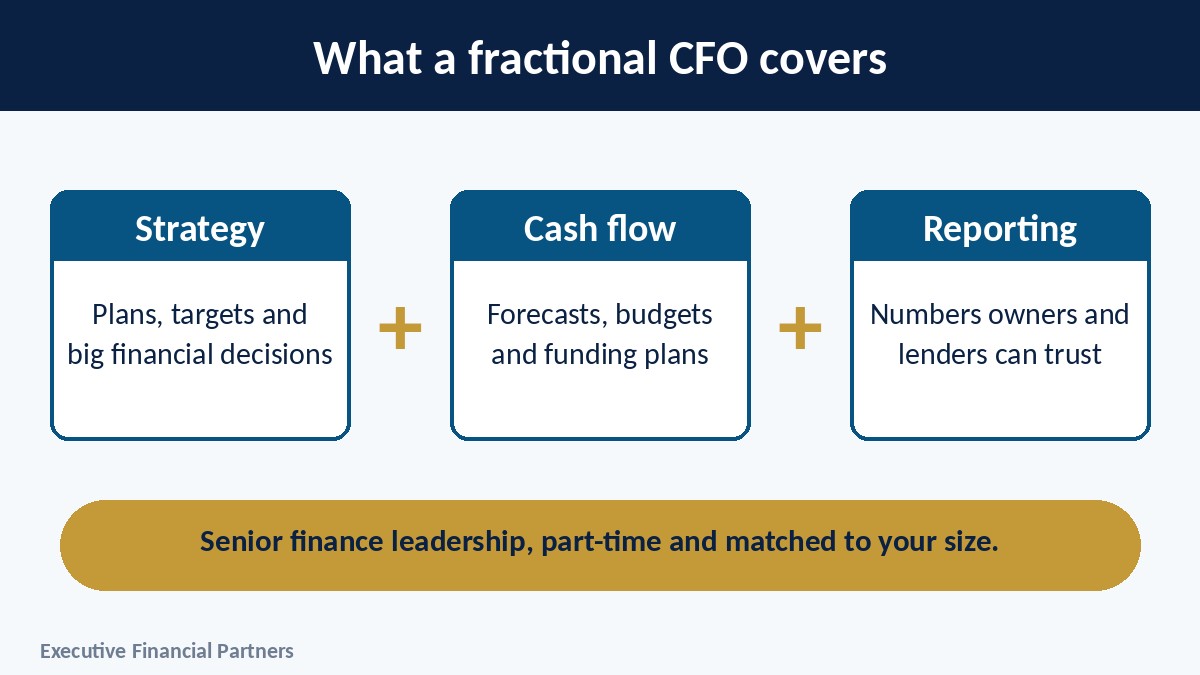
A fractional CFO takes responsibility for the financial direction of the business. The work varies by company, but it usually includes:
- Financial strategy: setting targets, pricing, and plans for growth, hiring, and investment.
- Cash flow management: building forecasts and budgets so you can see shortfalls before they happen.
- Reporting: turning bookkeeping into clear monthly financials and the key numbers owners should watch.
- Funding and lender conversations: preparing the material banks, investors, or partners ask for.
- Oversight of the finance function: making sure the bookkeeping, controls, and processes underneath are sound.
Fractional CFO vs. Other Finance Roles
Finance titles overlap, which is where most of the confusion starts. A simple way to separate them:
- Bookkeeper: records transactions and keeps the books current.
- Controller: owns the monthly close, internal controls, and accurate reporting.
- CFO: uses those numbers to guide strategy, planning, and major decisions.
A fractional CFO sits at the top of that chain. If your books are not reliable yet, a fractional controller often comes first. For a deeper comparison, read our post on fractional controller vs. fractional CFO.
How a Fractional CFO Engagement Works
Most engagements start with a review of your current financials, reporting, and processes. From there, the CFO sets a rhythm that fits the business, such as a monthly planning meeting, regular review of the financial statements, and availability for decisions that come up in between.
Because the arrangement is part-time, the time commitment is matched to what you need. Some businesses want a few hours a month. Others need more during a growth push or a funding round. The scope should be agreed in writing so both sides know what is included.
Who Benefits Most
A fractional CFO tends to make the most sense for businesses that have outgrown basic bookkeeping but are not ready for a full-time executive. Common examples include:
- Growing small and mid-size companies that need forecasting and planning.
- Medical practices managing payroll, overhead, and expansion.
- Law firms that need clear reporting on profitability by practice area.
- Nonprofits balancing grant funding, restricted funds, and reporting.
- Contractors dealing with job costing, cash timing, and bonding.
Signs It Is Time
If you are making big decisions without reliable forecasts, struggling to explain where cash went, or getting questions from a lender you cannot answer, the timing is probably right. Our post on when to hire a fractional CFO covers the warning signs in more detail.
Questions to Ask Before You Hire
- What exactly is included each month, and what costs extra?
- Who will I work with day to day?
- How will you report on progress, and how often will we meet?
- Do you have experience with businesses like mine?
- Will you work alongside my existing bookkeeper or accountant?
The answers tell you whether the person will act as a true partner or just an occasional advisor.
Frequently Asked Questions
Is a fractional CFO the same as a consultant?
Not exactly. A consultant is usually brought in for a defined project. A fractional CFO takes ongoing responsibility for the financial direction of the business, attending regular meetings and following the numbers month after month.
Do I still need a bookkeeper?
Yes. A fractional CFO relies on accurate records. Your bookkeeper or controller keeps the books current, and the CFO uses that information for planning and decisions.
How long does an engagement last?
It depends on the goal. Some businesses keep a fractional CFO for years as they grow. Others bring one in for a specific period, such as a fundraising effort, a restructuring, or until a full-time hire makes sense.
Can a fractional CFO work with my current CPA?
Usually, yes. Good fractional CFOs coordinate with your tax preparer and other advisors so everyone works from the same numbers.
Talk to a Fractional CFO in Atlanta
If you want a second set of eyes on your numbers, the team at Executive Financial Partners can walk you through the options. See our fractional CFO services in Atlanta page or reach out to schedule a conversation.


