
Bookkeeper vs accountant is one of the most common questions small business owners ask, and the two roles are easy to mix up. They overlap, but they do different jobs. Knowing the difference helps you hire the right help at the right time, and avoid paying for work you do not need.
What a Bookkeeper Does
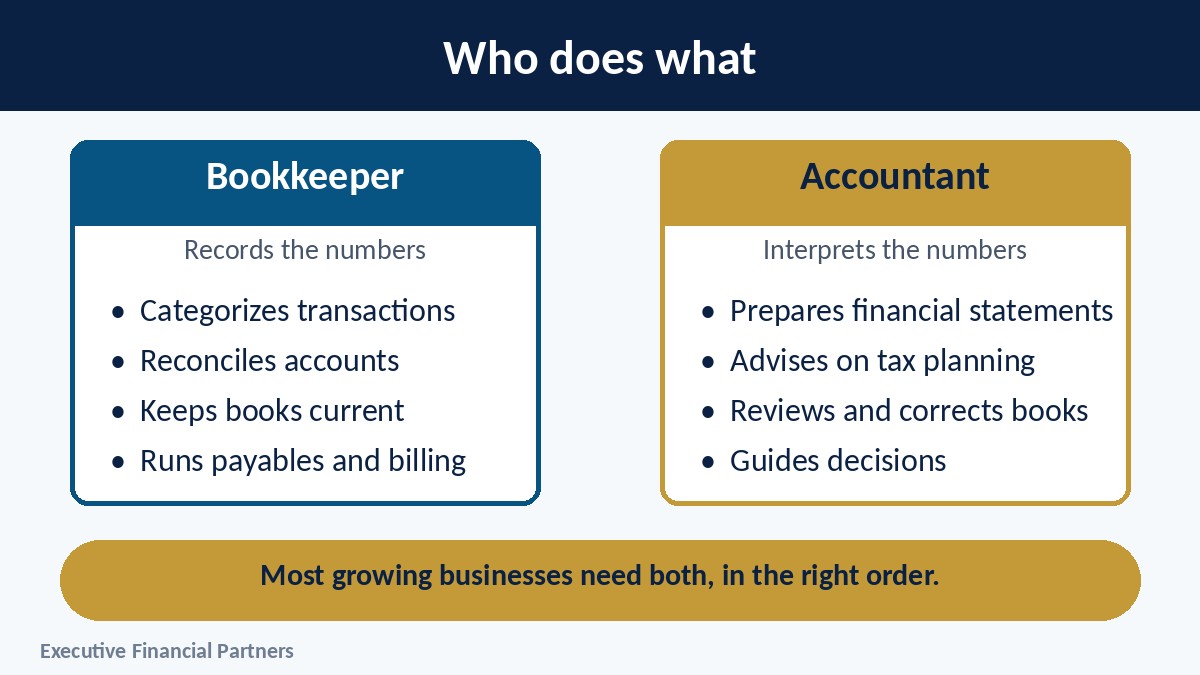
A bookkeeper keeps the day-to-day financial records. The work is detailed and recurring:
- Recording and categorizing transactions.
- Reconciling bank and credit card accounts.
- Managing accounts payable and receivable.
- Processing invoices, bills, and often payroll.
- Keeping the books current so reports are ready when you need them.
What an Accountant Does
An accountant works with the numbers the bookkeeper produces. The focus is on review, interpretation, and advice:
- Reviewing the books for accuracy and correcting errors.
- Preparing and analyzing financial statements.
- Advising on tax planning and compliance.
- Helping owners understand what the numbers mean for decisions.
- Preparing the financial information needed for lenders, audits, or a sale.
Accountant vs. CPA
The word accountant covers a wide range of people. A certified public accountant, or CPA, is licensed by a state board after meeting education, exam, and experience requirements. If you need a CPA to sign off on specific work, such as an attest engagement, make sure the person holds the license. Bookkeepers generally are not required to be licensed, though many hold certifications.
Key Differences at a Glance
- Focus: bookkeepers record the past, accountants interpret it and look ahead.
- Frequency: bookkeeping is ongoing, while accounting work is often periodic, such as monthly, quarterly, or yearly.
- Depth: bookkeepers handle transactions, accountants handle analysis, planning, and compliance.
- Cost: bookkeeping is typically less expensive per hour, though the right fit depends on what you need done.
Which One Does Your Business Need?
Start with where the pain is:
- If your records are behind, disorganized, or you are not sure where money went, you likely need bookkeeping first.
- If your books are current but you cannot make sense of them, or you have questions about taxes and planning, you need an accountant.
- If you are growing and want both reliable records and strategic guidance, you probably need both, plus someone who connects them.
That connecting role is often a fractional controller or a fractional CFO, who reviews the bookkeeping and turns it into reporting and planning. Our accounting and bookkeeping services cover both ends.
Mistakes to Avoid
- Hiring an accountant to do bookkeeping work, which can cost more than it needs to.
- Relying on a bookkeeper for tax or planning advice they are not trained to give.
- Having no review of the books at all, so errors build up unseen.
- Waiting until tax season to organize the records.
Frequently Asked Questions
Can a bookkeeper file my taxes?
Some can prepare simple returns, but tax preparation and planning are usually handled by a CPA or other tax professional. Ask about credentials and experience before you rely on anyone for tax work.
Do I need both for a small business?
Many small businesses use a bookkeeper for the monthly work and an accountant for review, taxes, and advice. Some firms provide both under one roof, which keeps everyone working from the same records.
Is a CPA better than an accountant?
A CPA holds a state license and has met specific requirements. That matters when you need licensed services. For many everyday needs, what matters most is experience with businesses like yours.
When should I move beyond a bookkeeper?
When you start needing reliable financial statements, forecasts, or guidance on growth and tax planning, add accounting or fractional finance support.
Not Sure Which You Need?
If you want a second set of eyes on your numbers, the team at Executive Financial Partners can walk you through the options. See our accounting and bookkeeping services page or reach out to schedule a conversation.


