
Nonprofit bookkeeping has a different job from bookkeeping for a for-profit company. The goal is not to maximize profit, it is to show donors, funders, and your board that money was used for the purpose it was given. That changes how transactions are recorded, how reports are built, and what needs to be tracked along the way.
This guide covers what makes nonprofit bookkeeping different, the areas that matter most, and mistakes to avoid.
How Nonprofit Bookkeeping Differs
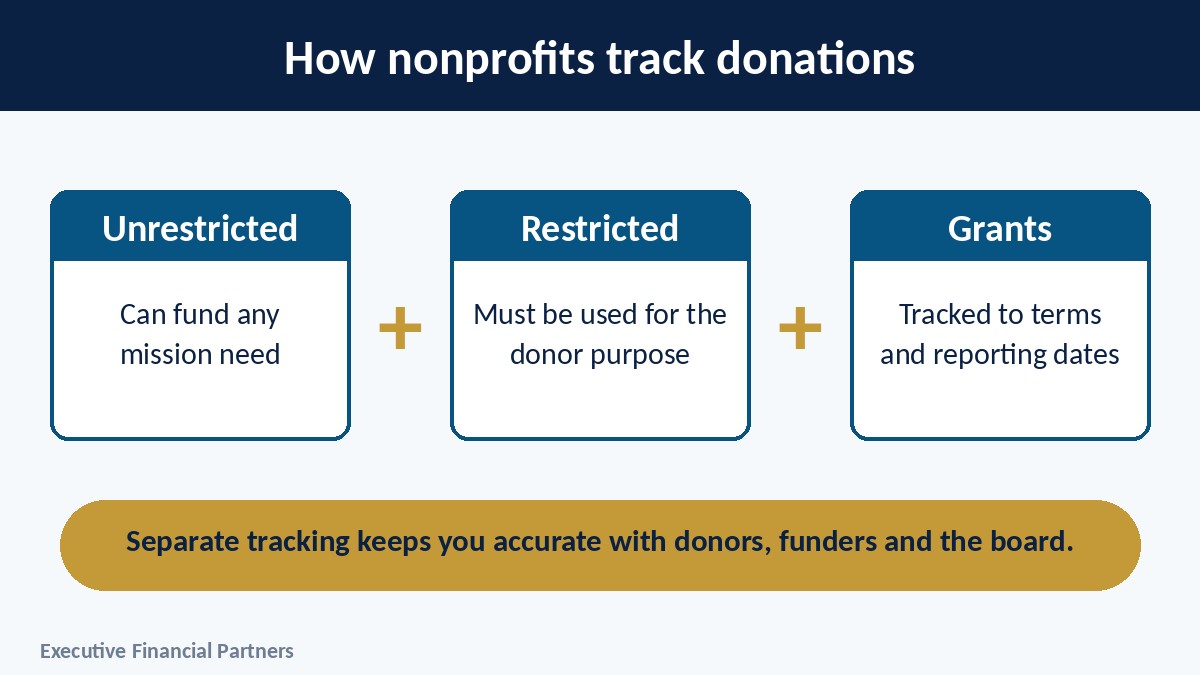
- Funds have conditions. Some gifts can be used for anything. Others must be used for a specific program or period.
- Reporting looks different. Nonprofits use statements built around net assets and functional expenses rather than owners’ equity and profit.
- More people rely on the numbers. Donors, grantmakers, auditors, and board members all want to see clear reporting.
- Compliance matters. Tax-exempt organizations generally file an annual information return, and the books need to support it.
Core Areas to Get Right
Restricted and Unrestricted Funds
Record each gift with its restriction from the start. A restricted gift should be tracked until the money is spent for its intended purpose, so you can show exactly how it was used. Mixing restricted money into general spending is one of the most common and most costly mistakes.
Grants and Contracts
Every grant comes with its own terms, deadlines, and reporting requirements. Track awards, amounts received, and amounts spent against each one, so you can produce the reports funders ask for without scrambling.
Functional Expense Allocation
Nonprofits typically report expenses by function, such as programs, management and general, and fundraising. Staff time and shared costs like rent need a consistent, documented method for allocating them across those categories.
Donor Records and Acknowledgments
Keep donation records accurate and tie them to the donor and the gift. Many organizations are expected to send written acknowledgments for larger gifts, so make sure the date, amount, and any goods or services provided are recorded correctly.
Payroll, Contractors, and Volunteers
Paid staff and independent contractors each carry their own paperwork. Volunteers are not paid, but in-kind donations of goods or services may need to be recorded, so ask your accountant how to handle them.
Reports Your Board Should See
- A statement of financial position showing assets, liabilities, and net assets.
- A statement of activities showing revenue and expenses.
- A budget-to-actual comparison to show how spending compares to the plan.
- A cash flow view so leaders can plan for slower months.
- A summary of restricted funds and grants and what remains available.
Common Mistakes
- Not tracking restrictions on gifts when they arrive.
- Letting the books fall behind until the audit or the annual return is due.
- Using one pool of expenses with no program, administrative, or fundraising split.
- Relying on a single volunteer with no backup or review.
- Mixing personal and organizational spending.
For a wider view of the accounting side, see our post on what nonprofit accounting is. If you are deciding who to hire, our guide to bookkeeper vs accountant explains the difference between the roles.
Frequently Asked Questions
Do nonprofits need a different accounting system?
Not necessarily a different product, but the setup should support fund tracking, grants, and reporting by function. Many organizations configure standard accounting software accordingly.
Who should review a nonprofit’s books?
Someone independent of the person recording transactions. That might be a treasurer, a finance committee, or an outside accountant.
How often should the books be reconciled?
Monthly is a good habit. It catches errors early and keeps board reports reliable.
When should a nonprofit get outside help?
If the books are behind, grant reporting is stressful, or the board does not trust the numbers, professional support can pay for itself in time and accuracy.
Keep Your Nonprofit’s Books Audit-Ready
If you want a second set of eyes on your numbers, the team at Executive Financial Partners can walk you through the options. See our nonprofit accounting services in Atlanta page or reach out to schedule a conversation.


