
Construction bookkeeping is not the same as bookkeeping for a shop or an office. Work is spread across jobs, payments arrive in stages, and the money you earn today may not reach your bank account for weeks. A general approach to the books can leave a contractor profitable on paper and short on cash.
This guide explains what is different about bookkeeping for construction companies and what to get right to keep your numbers useful.
Why Construction Bookkeeping Is Different
- Revenue is tied to projects. You need to know whether each job made or lost money, not just whether the company did.
- Billing happens in stages. Progress billing, deposits, and change orders mean income does not line up neatly with work performed.
- Cash timing is uneven. You often pay crews and suppliers before the customer pays you.
- Many people are paid in different ways. Employees, subcontractors, and suppliers each have their own paperwork.
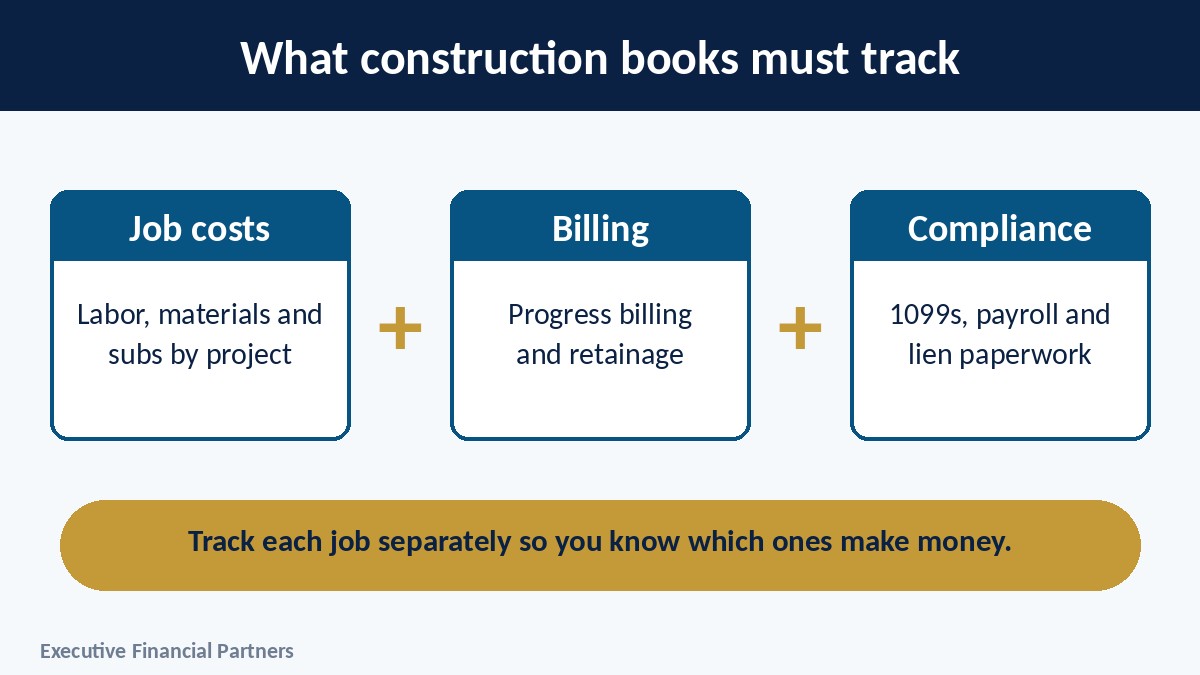
Core Areas to Get Right
Job Costing
Job costing means tracking labor, materials, equipment, and subcontractor costs against each project. Set up a clear way to code every expense to a job. Without it, you cannot compare the estimate to the actual cost or learn which kinds of work are worth taking.
Progress Billing and Retainage
Many contracts pay in stages, and some hold back a portion until the work is complete, known as retainage. Record billings, amounts received, and amounts held back separately so you can see what you are owed and when it is likely to arrive.
Work in Progress
A work in progress schedule compares what you have billed on each open job with how much of the job is actually done. It shows jobs that are over-billed or under-billed, which affects cash planning and the accuracy of your financial statements.
Subcontractors and Payroll
Keep a current record of every subcontractor, including their tax paperwork and insurance, and collect it before you pay them. Payroll for field crews can involve different rates and job assignments, so make sure hours are tracked to the right project. Some public projects have additional payroll reporting requirements, so check the contract terms.
Lien Waivers and Documentation
Payments in construction often come with paperwork, such as lien waivers. Keep these organized by job, with the payment they relate to, so you can find them quickly if there is ever a question.
Common Mistakes
- Mixing job expenses with general overhead, so job profit is unclear.
- Waiting until tax time to reconcile accounts.
- Not tracking retainage, then being surprised by cash shortages.
- Treating change orders informally, so costs are incurred that never get billed.
- Using a general-purpose setup that cannot report by job.
How Often to Review the Numbers
Most contractors benefit from a monthly review of job profitability, open billings, and cash. Closing the books on a regular schedule, reconciling accounts, and checking the work in progress schedule helps you spot problems while there is still time to fix them.
For a broader view of the accounting side, read our post on what construction accounting is. If you want to understand where bookkeeping ends and accounting begins, see bookkeeper vs accountant.
Frequently Asked Questions
Do I need special software for construction bookkeeping?
Not always, but you need a setup that can track costs and income by job. Many contractors use standard accounting software configured for job costing, while larger companies may use construction-specific tools.
Should a contractor use cash or accrual accounting?
It depends on the size of the business, contract types, and tax considerations. Accrual-based reporting often gives a clearer view of job performance, so talk to your accountant about what fits your situation.
How do I know if a job is profitable?
Compare actual costs against the original estimate and the amount billed. Tracking costs by job and reviewing a work in progress schedule makes this possible.
When should I get outside help?
If your books are behind, you cannot see profit by job, or cash keeps surprising you, it is time to bring in professional help.
Get Construction Books You Can Trust
If you want a second set of eyes on your numbers, the team at Executive Financial Partners can walk you through the options. See our construction accounting services in Atlanta page or reach out to schedule a conversation.


