
Most small business owners do not fall behind on bookkeeping all at once. It slips a little each week until tax time arrives and a year of transactions needs sorting. A simple monthly routine prevents that, and it gives you numbers you can actually use to run the business.
This checklist walks through what small business bookkeeping should include each week, each month, and at the end of each quarter and year.
Why a Monthly Routine Matters
- Problems surface early. A duplicate charge or missing deposit is easy to fix this month and painful to untangle next year.
- Your reports stay useful. Current profit and cash numbers help with pricing, hiring, and spending decisions.
- Tax time gets easier. Clean books mean less work for you and your tax preparer.
- Lenders and partners trust current records. Up-to-date financials make conversations about financing simpler.
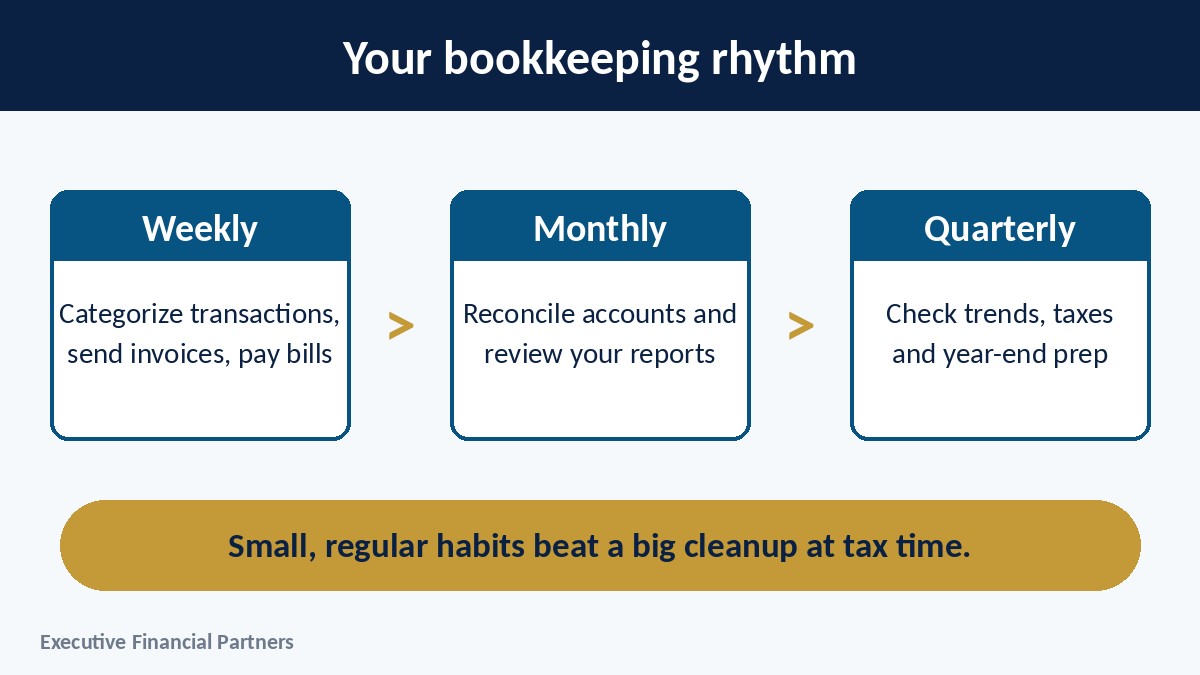
Weekly Tasks
- Record and categorize new transactions from your bank and credit cards.
- Send invoices promptly and follow up on unpaid ones.
- Enter and schedule vendor bills so nothing is paid late or twice.
- Save receipts and supporting documents where they can be found later.
The Monthly Checklist
1. Reconcile Every Account
Match your accounting records to your bank, credit card, and loan statements. Reconciliation is the single best check that your books are accurate.
2. Clear Uncategorized Items
Review anything sitting in a catch-all category and assign it correctly. Categories that stay vague lead to reports that cannot be trusted.
3. Review Receivables and Payables
Look at who owes you money and how long it has been outstanding. Review what you owe and when it is due, so you can plan cash instead of reacting to it.
4. Check Payroll Records
Confirm that payroll entries match your payroll reports and that withholdings and related payments are recorded. If you use contractors, make sure their paperwork is on file.
5. Review Your Financial Reports
Read the profit and loss statement and balance sheet each month. Compare them to the prior month and to your budget. Look for anything that does not make sense, such as an expense that jumped or a balance that is unexpectedly high or low.
6. Close the Month
Once the checks are done, treat the month as closed and avoid changing entries inside it without a note. Saving a copy of your reports gives you a reliable record to refer back to.
Quarterly and Year-End
- Review trends across the quarter, such as revenue, margins, and major expenses.
- Check that estimated tax payments and any required filings are on track, with your tax professional.
- Review fixed assets, loans, and any owner contributions or draws.
- At year-end, confirm that every account is reconciled, gather your final reports, and send them to your tax preparer.
Common Bookkeeping Mistakes
- Mixing personal and business spending in the same account.
- Letting reconciliations slide for several months.
- Ignoring unpaid invoices until cash gets tight.
- Using vague categories that hide where money goes.
- Relying on memory instead of saving receipts.
If you are not sure who should be doing this work, our guide to bookkeeper vs accountant explains the difference. When the books need senior oversight, a fractional controller can own the monthly close for you.
Frequently Asked Questions
How much time does monthly bookkeeping take?
It depends on how many transactions you have and how organized your records are. Staying on top of it weekly keeps the monthly work short.
Can I do my own bookkeeping?
Many owners do at the start. As the business grows, the time and risk of mistakes often make outside help worthwhile.
What software should I use?
Common accounting platforms work well for most small businesses. What matters more is a consistent setup and a regular routine.
When should I hire a bookkeeper?
If your books are behind, you dread reconciling, or you cannot trust your reports, it is time to get help.
Get Your Books Back on Track
If you want help keeping up with the monthly routine, the team at Executive Financial Partners can take it off your plate. See our accounting and bookkeeping services page or reach out to schedule a conversation.


